A Hidden Chapter in Miami Valley History
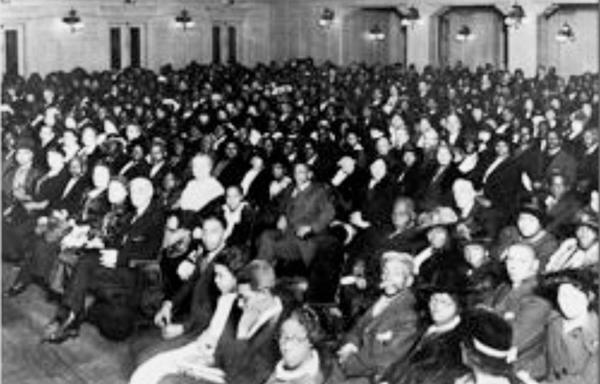
The Youngs of Wilberforce — Charles and Ada — were connected to a remarkable network of African American educators, artists, and intellectuals. Their story also intersects with the early Bahá’í Race Amity movement in ways that have received little attention.
‘Abdu’l-Bahá and the Beginning of Race Amity
The Miami Valley’s story of Race Unity reaches back to ‘Abdu’l-Bahá’s historic journey across America in 1912. During His eight-month visit, He challenged Americans to overcome racial prejudice and to recognize the oneness of humanity—not simply through tolerance, but through genuine friendship and unity. He envisioned humanity as a beautiful garden in which differences contribute to the beauty of the whole:
“The world of humanity…is like a garden, and humankind are like the many-colored flowers.”
‘Abdu’l-Bahá’s vision continued to inspire action after His return to the Holy Land. In 1920, Agnes S. Parsons, a wealthy white woman prominent in Washington, D.C. society, was given an unexpected challenge during her second pilgrimage to the Holy Land. Although she had no prior experience in race relations and had lived largely within her own privileged social circle, ‘Abdu’l-Bahá entrusted her with organizing a convention to bring Black and white Americans together. He told her:
“I want you to arrange a Convention for unity of the colored and white races. You must have people to help you.”
Parsons was initially overwhelmed by the task, but she accepted it and, with the help of others—including Coralie F. Cook, a Bahá’í and professor at Howard University, and Alain Locke, a Howard University professor and prominent intellectual—organized the first Race Amity Convention in America, held in Washington, D.C., May 19–21, 1921.
The importance ‘Abdu’l-Bahá attached to this effort was extraordinary. In a message sent to the convention, He wrote:
“Say to this convention that never since the beginning of time has one more important been held. This convention stands for the oneness of humanity; it will become the cause of the enlightenment of America.”
The Washington Convention’s Impact
The impact of the Washington convention was deeply felt by those who attended. In a letter to Agnes S. Parsons, M. F. Harris, a participant in the convention, described the profound effect the gathering had on him:
“I attended every session, day and night … Many times throughout the meetings did with much effort restrain my tears. My heart leaped and throbbed and many times almost burst within my breast. I am a colored man … My race as a whole, I believe, is quite ready to welcome the glad day when all will be brothers. … The trouble is nearly unilateral. God give us the day.”
— M. F. Harris, participant in the Convention for Amity Between the Colored and White Races Based on Heavenly Teachings, Washington, D.C., May 19–21, 1921, in a letter to Agnes S. Parsons.
The Washington, D.C. gathering became known as the “Mother Convention,” as Race Amity conferences soon spread beyond the nation’s capital to communities across the country.
Read: ‘Abdu’l-Bahá’s Race Unity work in America in 1912 →
The Race Amity Movement Takes Root
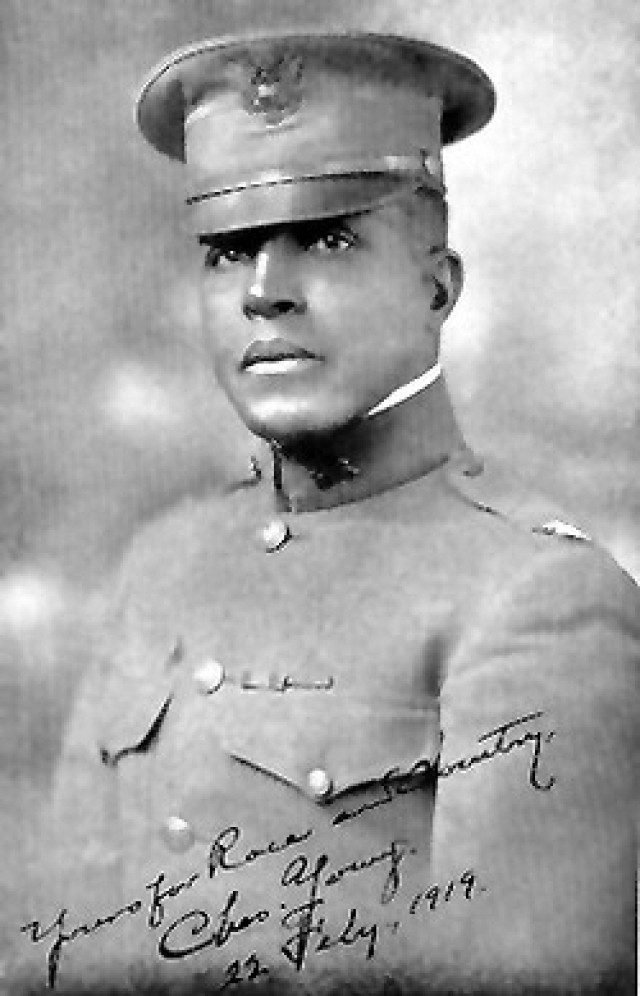
The second city to respond to the urgent call of the Master (‘Abdu’l-Baha) was Springfield, Massachusetts, where at the time there were but three Bahá’ís, one of whom was an itinerant teacher. (1) The Conference was held on December 5–6, 1921. On its second day, Colonel Charles L. Young of Wilberforce, Ohio, a distinguished African American military officer, educator, and civil rights leader addressed the gathering on “One God, One Law.”
Roy Williams, one of the Bahá’í organizers of the Springfield conference, later recorded Colonel Young’s address in Star of the West (April 28, 1922), writing that Young spoke with “a great outburst of eloquence,” emphasizing the fitness and equality of Black Americans, their economic advancement, their service to their country, and the need for “one law and one God” for both races.
Read Roy Williams’s full account of the 1921 convention; Star of the West, Vol. 13, No. 3, April 28, 1922, p. 51.
The Springfield conference would be among Charles Young’s final public engagements. Just 33 days later, on January 8, 1922, he died from a kidney infection in Lagos, Nigeria. His remains were returned to the United States in 1923, and he was buried with full military honors at Arlington National Cemetery in Virginia. In 2021, nearly a century after his death, the U.S. Army posthumously promoted him to Brigadier General.
W. E. B. Du Bois, who had been a close friend of Young’s since their years at Wilberforce, reflected on his life in a eulogy published in The Crisis shortly after his death:
“The life of Charles Young was a triumph of tragedy.”
— W. E. B. Du Bois, The Crisis, February 1922
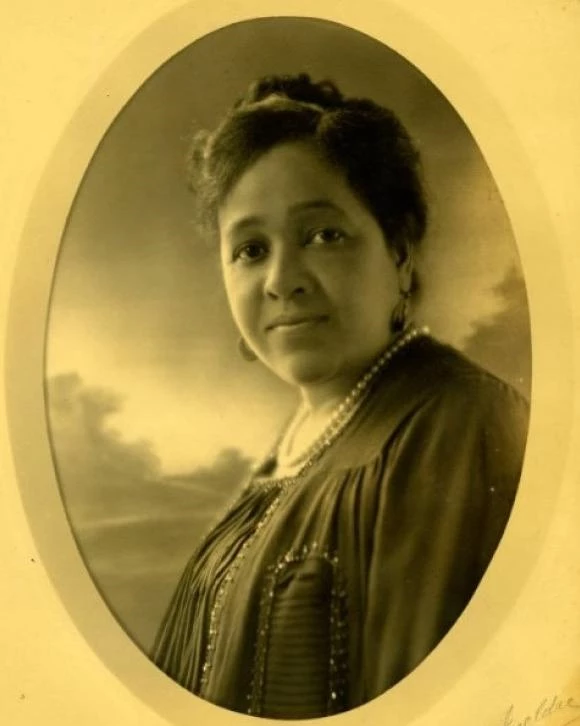
The story did not end with Charles Young. One of the people who became closely associated with the development of the Bahá’í Race Amity movement in the Dayton area was Ada Mills Young, widow of Colonel Charles Young.
Dayton Joins the Movement
The movement quickly spread beyond Washington and Springfield, Massachusetts. New York and Philadelphia followed with Race Amity Conferences, and in 1927 Dayton, Ohio, became the fifth city in the country to organize one.
Louis G. Gregory, in his historical review of the Race Amity movement, described Dayton as “the fifth to express the need of an amity conference.” At the time, Dayton had only two resident Bahá’ís. Joined by two traveling teachers, they expanded a planned world unity conference to include a Racial Amity Conference as its first session. Several liberal organizations joined in support, with Wilberforce University providing the services of its Glee Club.
The conference brought Black and white participants together in equal numbers and helped establish a continuing tradition of interracial fellowship in the Miami Valley.
(1) Read Louis G. Gregory’s full historical account “Racial Amity in America” The Bahá’í World, Volume 7.
Ada M. Young and Youngsholm
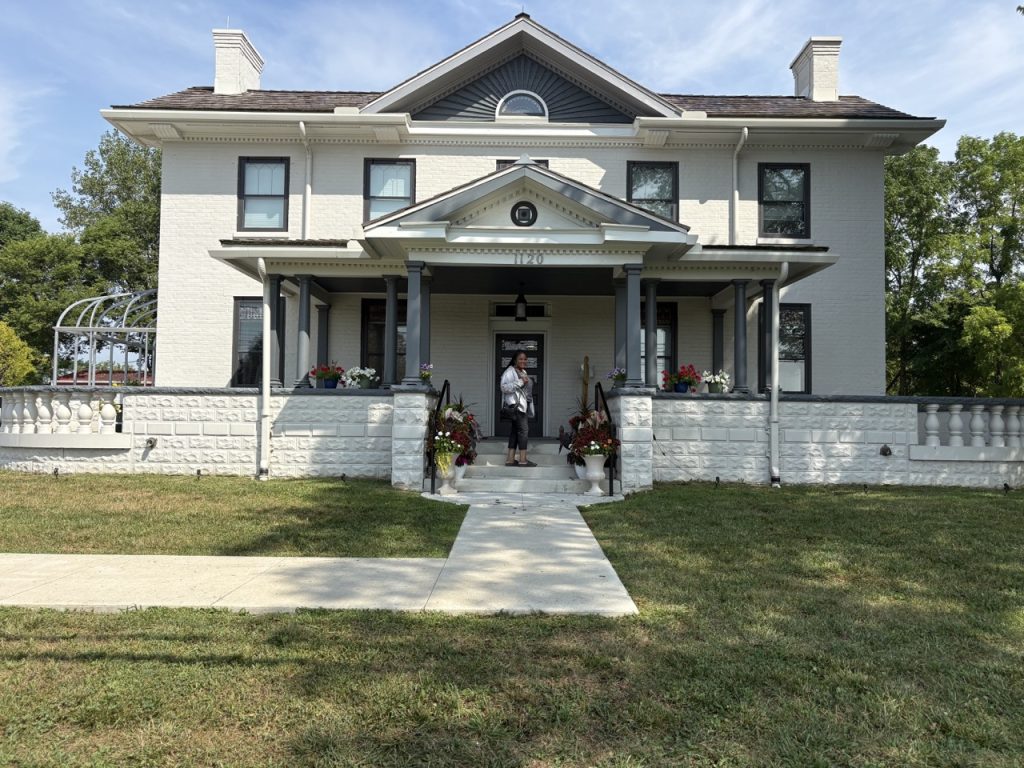
Following Dayton’s first Racial Amity Conference in 1927, Ada M. Young’s home, Youngsholm, became a center for Bahá’í activities in the area. Youngsholm is located in Wilberforce, Ohio, near Wilberforce University, a few miles east of Xenia.
Louis G. Gregory, one of the early leaders of the Bahá’í Race Amity movement, described what followed:
“The home in Xenia of Mrs. Ada M. Young, widow of the late Col. Charles Young, U. S. A., from this time became a center for Bahá’í activities in that section, with many interracial meetings and addresses at Wilberforce University to follow.” (Gregory referred to the area as Xenia; Youngsholm itself is in present-day Wilberforce.)
Louis G. Gregory, writing about the early development of the Bahá’í community in Dayton, specifically connected Ada M. Young with the community’s early work in racial amity. He wrote:
“The Dayton Bahá’ís, recruited in numbers, held a second amity conference April 12, 1929, using the services of Prof. M. N. Chatterjee of Antioch College and a Bahá’í speaker, with Josef McCoy, versatile and accomplished, as both entertainer and chairman. The names of Frances Fales, Helen McVey, Josef and Helen McCoy, Ada M. Young and Sylvia Margolis will be inseparably linked with the early evolution of the Bahá’í Faith in Dayton, which now has the blessing of a spiritual assembly.”
Read Louis G. Gregory’s full account of the early Race Amity movement in The Bahá’í World, Volume 7.
Today, Youngsholm is preserved as the Charles Young Buffalo Soldiers National Monument. The preservation of this historic home gives special significance to its role in the story of racial amity in the Miami Valley.
Researching Charles and Ada Young’s Bahá’í Connections
Research into Charles and Ada Young’s connections with the Bahá’í community and the Race Amity movement is continuing. Several questions have been submitted to archival and historical sources, and we will update this page if reliable documentation comes to light.
Among the questions currently being investigated are:
- Did Charles Young or Ada Young ever formally enroll as Bahá’ís? An inquiry has been submitted to the Bahá’í National Center Archives. The archivist has explained that there is a substantial queue of research requests, so an answer may take some time.
- Was Colonel Charles Young in Washington, D.C., on April 23, 1912, when ‘Abdu’l-Bahá spoke at Howard University? Young had recently been elected an honorary member of Omega Psi Phi at Howard University, and we are continuing to look for documentation that might establish his whereabouts at that time.
- What additional evidence may exist concerning Charles and Ada Young’s connections with the Bahá’í community and their involvement in the Race Amity movement?
These questions remain open, and the search for primary documentation continues. If you have letters, photographs, newspaper accounts, personal recollections, or other historical material that may shed light on the Youngs’ Bahá’í connections, please contact us.
Race Amity Conferences Renewed
The tradition of national Race Amity conferences was renewed in the 21st century with the establishment of the National Center for Race Amity in 2010. Beginning in 2011, the Center convened annual National Race Amity Conferences, continuing the legacy of the 1921 convention. In 2021, the centenary of the first convention was commemorated with a National Race Amity Centenary Conference.
Race Unity Gatherings — A Long-Held Tradition in the Miami Valley
The history of Race Unity efforts in the Miami Valley extended beyond the early Race Amity conferences. Bahá’ís and their friends found other ways to bring people together and promote racial unity across the region.
From Race Amity Day to Race Unity Day
The movement also took a new form nationally. In 1957, the Bahá’ís of the United States established Race Amity Day, to be observed on the second Sunday in June. The first observance was held on June 9, 1957, and the Dayton Daily News reported on the local celebration. In 1965, Race Amity Day was renamed Race Unity Day.
In the Miami Valley, Race Unity Day became an occasion for picnics and other gatherings, held regularly for many years and continuing today, including a gathering in Yellow Springs in June 2026.
Today, with Juneteenth established as a national holiday on June 19, the Miami Valley Bahá’í community is exploring how these two observances might complement one another. In Yellow Springs, Bahá’ís have supported local Juneteenth celebrations, joining with the wider community in this important commemoration. Description and photos of our Heart of Humanity Gardening Game at Juneteenth
A Story Still Being Gathered
Race Unity efforts in the Miami Valley have taken many forms over the years. Dayton sponsored a Human Rights Award for many years, workshops throughout the Miami Valley addressing “the most vital and challenging issue” of racism, and Bahá’í Youth Workshops, in which young people from throughout southern Ohio gathered in Yellow Springs to learn, practice, and perform dances expressing themes of racial unity and equality. These workshops grew out of the Bahá’í Youth Workshop movement that began in Los Angeles.
The One Human Family Workshop in Dayton also brought people together for workshops and musical programs, sometimes joining with church choirs to sing African American spirituals alongside selections from the Bahá’í Writings.
If you have a story to share about Race Unity activities in the Miami Valley, please contact us. Help us preserve and tell the story of this continuing effort to build friendship, understanding, and unity across racial lines.
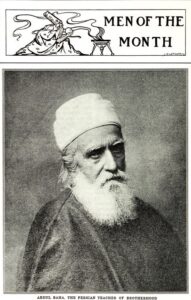
Du Bois had a personal connection to Wilberforce as well. He taught at Wilberforce University during the same years Charles Young served there, and the two men formed a lifelong friendship. Du Bois also met Nina Gomer at Wilberforce, whom he married in 1896. His wife, Nina, officially enrolled in the Bahá’í Faith in 1936. W. E. B. Du Bois also had a significant connection to ‘Abdu’l-Bahá and the Bahá’í teachings on racial unity. In 1912, Du Bois published ‘Abdu’l-Bahá’s address to the NAACP conference in The Crisis and featured Him prominently in his “Men of the Month” section. Following ‘Abdu’l-Bahá’s death in 1921, Du Bois wrote in The Crisis, “Two men sit high before the world today—Eugene Debs and Abdul Baha, One is free of chains which should never have bound him—the other of Life which he tried to free of race and national prejudice.” February.1922
Further Reading & Resources
The story of Race Amity reaches far beyond the early conferences and the Miami Valley. The resources below explore the Bahá’í engagement with racial justice and the struggle against racism, including the experiences and perspectives of prominent African American intellectuals, historical accounts of the Race Amity movement, and contemporary reflections on the Bahá’í approach to racial unity. They also include Bahá’í writings and statements from Bahá’í institutions on race, racism, and the oneness of humanity.
Historical Perspectives
‘Abdu’l-Bahá’s Race Unity Work in America — 1912
The Bahá’í ‘Race Amity’ Movement and the Black Intelligentsia in Jim Crow America:
Alain Locke and Robert Abbott – Christopher Buck published in Bahá’í Studies Review 17, pp. 3-46 2011
W.E.B. Du Bois and the Bahá’í Faith By Guy Emerson Mount
Abdu’l-Baha* Travels Across America in 1912 with Stops in Cleveland and Cincinnati
A Vision of Race Unity: an overview of the important and central role that Black Americans have historically played in the development of the American Bahá’í community.
See: The many resources available on this website under Race Unity
Bahá’í Writings & Institutional Statements
Baha’i Sacred and Authoritative Writings Concerning: Oneness of Humanity – Unity in Diversity – The Elimination of Prejudice and Racism Considered the Most Vital and Challenging Issue Confronting American Baha’is.
Baha’i Statements on Global Issues: Messages of the Universal House of Justice, Baha’i International Community, The National Spiritual Assembly of the Baha’is of the United States – Peace, Equality, Elimination of Racism, Environment, Prosperity of Humankind, A Path Towards Justice etc.
Videos & Contemporary Perspectives
Towards Oneness – Dr. Cornel West praises the Baha’i Faith, one of the first religious groups to really hit racism and white supremacy head on, decades ago and remain consistent about it.
The Roots of the Race Amity Movement – May 1921, the nation’s capital played host to a multi-racial interfaith gathering the likes of which had rarely been seen in the segregated south. This gathering was organized by the Baha’is at the behest of ‘Abdu’l-Baha.
The David Kellum Awards – The Bud Billiken Parade and Picnic, which still takes place annually in Chicago, was started by Bahá’ís Robert Abbott and David Kellum in conjunction with the Chicago Defender. David Kellum was a long-time member of the Chicago Bahá’í community, an editor at the Chicago Defender, and a civil rights leader dedicated to inspiring young people and improving relations between the races.
CNN: This Is Life with Lisa Ling — Interracial Love and the Bahá’í Faith