HARRIET GIBBS MARSHALL (1868-1941)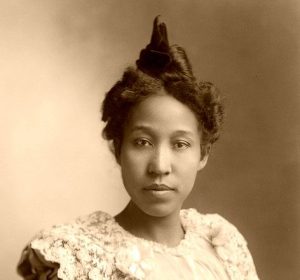
She became a Baha’i in 1912, while Abdu’l Baha was visiting the US. An extremely educated woman – especially for that time – she studied piano, pipe organ, and voice culture at the Oberlin Conservatory of Music and in 1889.
Ms. Marshall was the first African American that earned a Mus.B. degree (Bachelor of Music degree). In 1903, she founded the Washington Conservatory of Music. It was the most successful African-American owned and operated music school that promoted the study, performance of quality, and self-produced black music in the US.
In 1936, Ms. Marshall established the National Negro Music Center for the research and preservation of the musical heritage of African- Americans. She directed both the Washington Conservatory of Music and Negro Music Center until her death on February 25, 1941.
Sources at blackpast.org state, “Marshall’s conservatory was a landmark in the history of black education. The Center sponsored regular concerts for the black community, trained many prominent musical professionals and attracted the nation’s most talented musicians as teachers. It remained in operation until 1960.”
Harriet Gibbs Marshall (1868-1941)Washington Conservatory of Music and School of Expression, founded in 1903 by concert pianist, entrepreneur and educator Harriet Gibbs Marshall (1868-1941), was one of the city’s earliest institutions promoting the arts for children and adults. Marshall worked to inspire and train African-Descent American musicians and to encourage them to create and embrace their own heritage of concert music. She also pioneered the hiring of married women, and herself ran one of the longest running female run businesses in the city.
She was the first Baha’i to pioneer to Haiti. She set up the first Music School to teach African-Descent music in that country. She was able to do so due to her husband Napoleon B. Marshall’s USA military tenure there. Later, she coached Hand of the Cause of God Louis and Louisa on their teaching in Haiti. Mr. Marshall was noted by Mr. Gregory to be a great friend of the Faith.
The Gregories reported back to her from Haiti: “You (Harriet) are very much loved among them (the Haitians) for the constructive services you have rendered them. “Welcome to Haiti”, said one of the officials upon knowing that I had a letter of introduction from you. The Baha’i seed sown by you is also having effect. So you should be both happy and thankful to the Lord of Might, Baha’u’llah, that you have served the establishment of His Kingdom on earth. Following your advice, we had service at the Bellevue Hotel for a week and had contacts with many prominent people … Mrs. Gregory joins me in Baha’i greetings, best wishes and thanks. …
P.S. you will do well as far as you are able, to keep in touch with the Baha’is. Even if you cannot attend meetings, ask them to send you the publication Baha’i News, so you will be informed about current-happenings in the faith and spiritually what comes from its Guardian, Shoghi Effendi, in the Holy Land. L.G.G.”
In 1930 she wrote a book, “The Story of Haiti: From the Discovery of the Island by Christopher Columbus to the Present Day.” The book stood out for being a first hand account, in contrast to its peers at the time. In 1937 she founded the National Negro Music Centre and participated in the founding of the National Association of Negro Musicians.
Harriet Gibbs Marshall (1868-1941)
- Marshall was highly educated, studying piano, pipe organ, and voice culture at Oberlin Conservatory.
- First African American to earn a Bachelor of Music degree (1889)
- Founded the Washington Conservatory of Music (1903), a landmark institution for Black musicians.
- Became a Baha’i in 1912 during ‘Abdu’l-Baha’s visit to the U.S. and hosted interracial Baha’i events at her conservatory despite segregation.
- She was a pioneer in hiring married women and operated one of the longest-running female-led businesses in Washington, D.C.
- Pioneered Baha’i teaching in Haiti (1922-1928), founding the Jean Joseph Industrial School and Haiti’s first music school for African-Descent music. (She accompanied her husband, Napoleon B. Marshall, who was stationed there with the U.S. legation.) She coached Louis and Louise Gregory in their Baha’i teaching efforts in Haiti. The Gregories praised her impact in Haiti, writing: “You (Harriet) are very much loved among them (the Haitians) for the constructive services you have rendered them.” Worked extensively with Haitian social welfare charities.
- Founded the National Negro Music Center (1936) and co-founded the National Association of Negro Musicians (1937), preserving African American musical heritage.
- Authored – The Story of Haiti: From the Discovery of the Island by Christopher Columbus to the Present Day (1930) is notable for several reasons:
- Comprehensive Historical Account: The book provides an extensive overview of Haiti’s history, covering the period from its discovery by Christopher Columbus up to the early 20th century.
catalog.hathitrust.org - Firsthand Perspective: Drawing from her six-year residence in Haiti, Marshall offers unique insights and observations, enriching the narrative with personal experiences.
en.wikipedia.org - Cultural and Social Insights: Beyond political events, the work delves into Haiti’s cultural and social aspects, providing readers with a holistic understanding of the nation’s heritage.
- Educational Contribution: As an educator and advocate for Black culture, Marshall’s publication serves as an important resource for those interested in Haitian history and the broader African diaspora.
Her book offers valuable cultural and social insights into Haiti, shaped by her experiences during the U.S. occupation. Notable contributions include:
- Engagement with Haitian Organizations: Marshall actively participated in local groups, such as the Haitian Brotherhood and the Organization of Haitian Women, where she served as Vice-President. These roles provided her with a deep understanding of Haitian society and women’s contributions.
en.wikipedia.org - Educational Initiatives: She co-founded the Jean Joseph Industrial School in Port-au-Prince, focusing on vocational training. This endeavor reflects her commitment to education and offers insights into the educational landscape of Haiti during that period.
en.wikipedia.org - Advocacy for Haitian Autonomy: Upon returning to the U.S., Marshall and her husband established the Save Haiti Committee, advocating for the withdrawal of U.S. troops from Haiti. This activism underscores her engagement with Haiti’s political situation and her support for its sovereignty.
en.wikipedia.org
Through these experiences, Marshall’s book provides a nuanced perspective on Haiti’s cultural and social dynamics during a transformative period in its history.
Harriet Gibbs Marshall’s The Story of Haiti: From the Discovery of the Island by Christopher Columbus to the Present Day is available online. You can access the full text through the HathiTrust Digital Library. The book is available in full view from the University of California and the University of Wisconsin – Madison. Published 1931
Sources
